CHINA · GUIDED CLIMB PLANNING
Before a Guided Snow Mountain Climb in China: What Support Should You Confirm?
A guided climb may be described with one simple word: “supported.” That word does not tell you who leads on the mountain, who checks equipment, who handles local registration or what happens if one person needs to descend early. Ask for a written plan that names the people, responsibilities and decision points for your proposed mountain and dates.
This is a pre-booking conversation guide, not a list of services included on every trip. The answer can differ between destinations, organizers and specific departures. A guide's presence does not remove altitude, weather or terrain risk, and a proposal does not establish that a route is open today.
Identify the organizer, the route and the local permissions
Start with the exact mountain, the proposed activity and the area the group expects to enter. Ask which organization is responsible for the booking and on-mountain activity, who the lead guide is, and what experience or qualification is relevant to that objective. If more than one business is involved, ask which one signs the agreement and which one is responsible for each part.
Ask how the organizer will confirm the current permitted route, registrations or approvals for your departure. Requirements are local rather than interchangeable across China. For example, a September 2026 notice published by the Siguniangshan authority on behalf of Aba prefecture departments asks participants to check the operator and guide's qualifications, clarify safety responsibility in an agreement and follow the applicable approval and filing process. That notice is specific to its jurisdiction and does not itself confirm an opening for another mountain or date.
If the proposal cannot name the responsible organizer, guide and currently permitted activity, resolve that before discussing a summit target. For an example of how objective choice differs from access, see our Dafeng versus Erfeng comparison.
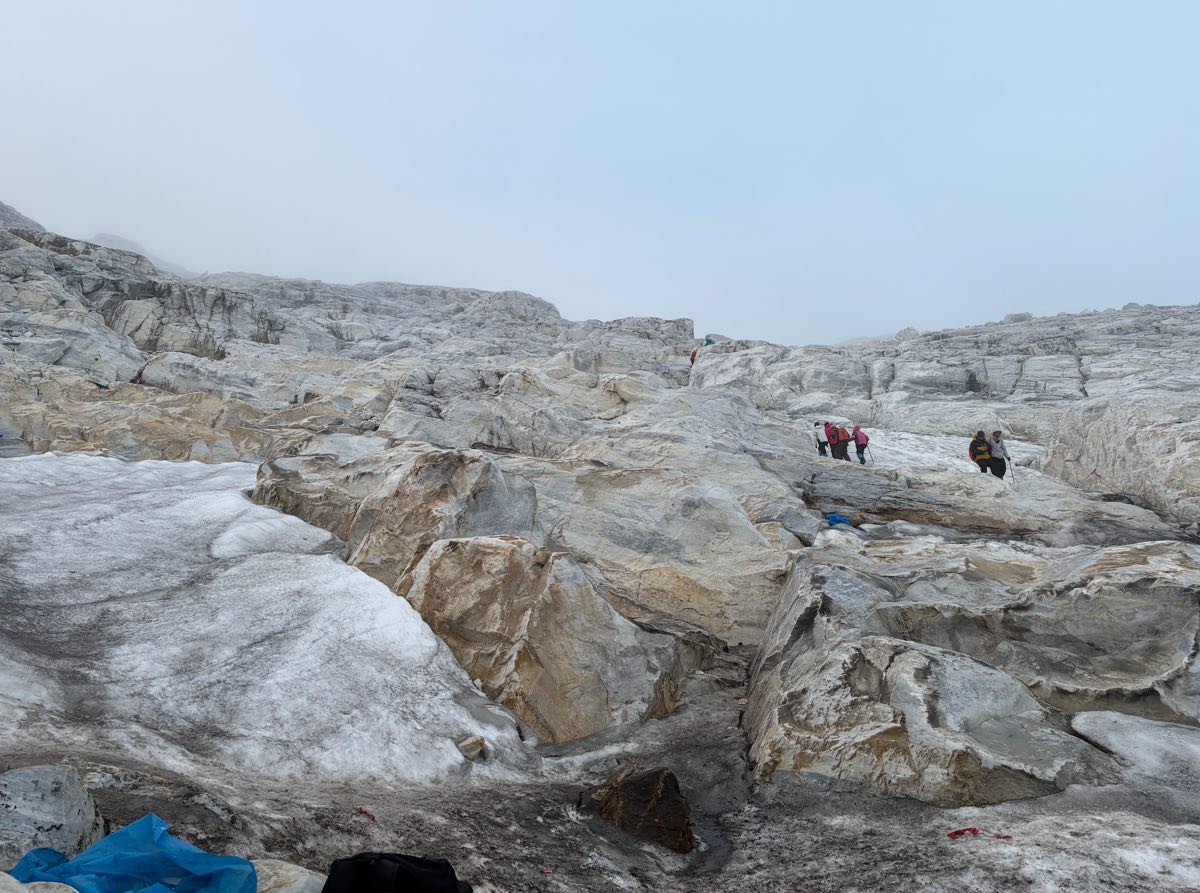
Ask who leads and how the group is managed
Who is the named lead on the mountain, and who takes over if that person cannot continue? How many participants and on-mountain staff are expected in this group? Ask what language is used for instructions and whether someone can translate decisions clearly when conditions change.
The UIAA's route-planning guidance says a leader should weigh route difficulty, participant competence and objective hazards together, then consider decision points and alternatives. Use that framework to ask who checks your experience and altitude history, who makes a turnaround call, and how it is explained to the group. A guide-to-client number without the terrain, staff roles and contingency plan is not a complete answer.
If a participant turns back while others are able to continue, who accompanies that person, and who remains qualified to lead the rest? Confirm the actual arrangement before you book; do not infer that an extra guide or separate escort is automatically included.
Separate equipment from instruction and checks
Request an itemized list with three columns: what the organizer provides, what can be rented separately, and what you must bring. Then ask who checks fit and compatibility, when the handover happens, and what practice or briefing is planned before any equipment is needed on difficult ground. A photo of a helmet or rope cannot answer those questions.
The UIAA's expedition preparation guidance emphasizes checking communal and safety equipment before departure. It is a useful prompt for asking who maintains and checks the specific equipment in your proposal; it is not evidence that any particular organizer supplies it. Our mountaineering gear rental checklist covers boot fit and technical compatibility in more detail.
Agree on communication and the response chain
Ask how the team expects to communicate within the group and with its outside contact, where coverage may be unreliable, and what backup is planned if the first method fails. Name the person who receives a missed-return alert. For an injury, illness or weather interruption, ask who makes the initial assessment, who contacts local services and what the practical descent or transfer options are from the proposed route.
The UIAA's advice on evaluating a commercially organized trip recommends asking about guide training, nearby care, evacuation planning, communication and language. Those are questions to put to an organizer, not a promise of immediate rescue, medical treatment, satellite coverage or a helicopter. Ask what is actually arranged and what remains dependent on local availability.
Decide how a changed day affects everyone
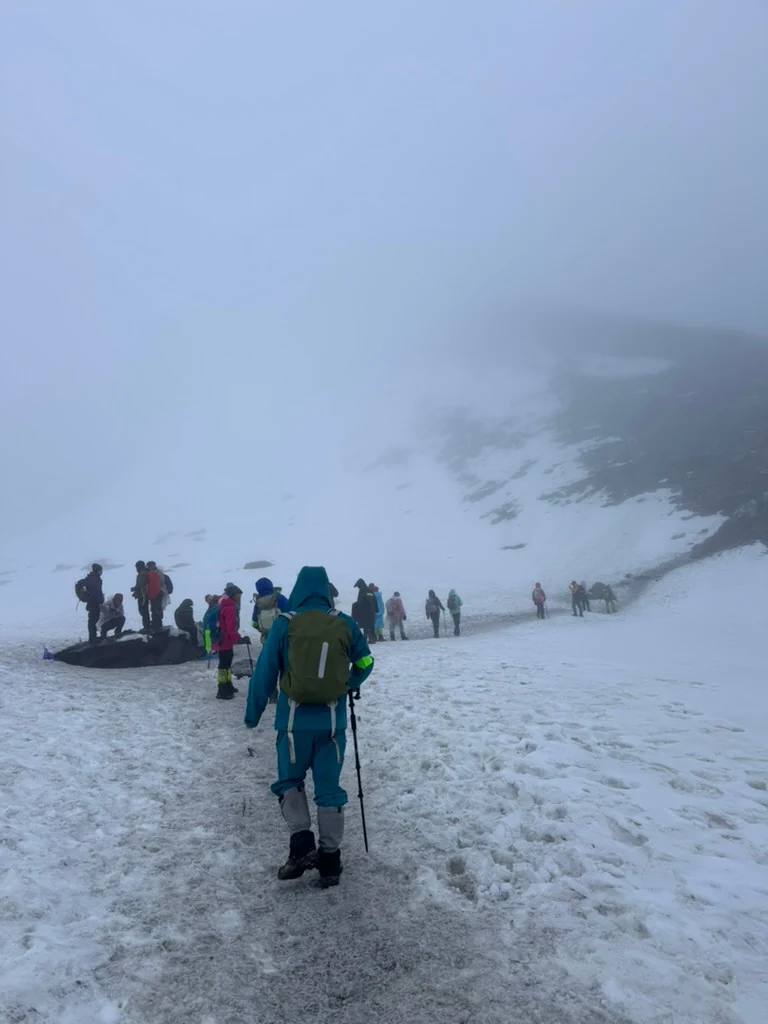
Before the departure, discuss conditions that would lead to a later start, a lower objective or a complete turnaround. Ask who has authority to stop the ascent and what happens to each participant after that decision. A clear response should cover the descent and regrouping, not just the summit attempt. Our weather planning guide explains why forecast changes and on-site observations can change the objective.
Keep the commercial consequences separate from the mountain decision. Ask for the written terms on weather changes, unused services, postponement and cancellation; do not assume a particular refund or substitute route. Confirm the return transfer and any luggage or accommodation handoff if the plan changes.
A concise message to send before booking
You can ask an organizer:
- What exact mountain, activity and currently permitted route does this proposal cover, and who checks the applicable registration or approval?
- Which company signs the agreement, who is the lead guide, and who else is on the mountain with the group?
- How are participant experience, altitude history, group size and instruction language checked?
- What equipment is provided, rented separately or brought by me, and who checks it before departure?
- Who decides to turn back, and what is the plan if one person descends while the group continues?
- How will the team communicate, contact help and complete the descent if weather or health changes?
- What do the written terms say about a changed objective, postponement and return arrangements?
An answer that names people and boundaries is more useful than “everything is included.” If any critical item is still unclear, request the final written proposal before committing.
Planning with SHANLO
If you are comparing a guided snow-mountain objective in China, share your proposed month, group size, previous hiking and altitude experience, and the questions above. We can discuss what information needs confirming for a suitable proposal; no guide assignment, equipment, permit, rescue capability or service inclusion is established by this article. If Haba is one destination you are considering, the Haba summit-climb page provides context for an enquiry, not a fixed service package.
Source and date note: The UIAA guidance and the Aba prefecture notice linked above were reviewed on 3 November 2026. The notice was published on 11 September 2026 and is not a live access bulletin. Confirm the destination's current rules and conditions directly for your travel dates.
SHAPED AROUND YOU
Clarify your mountain proposal.
Share your dates, group size, experience and questions about guide roles, equipment and the return plan.