CHINA · MOUNTAIN WEATHER AND PLANNING
How Weather Can Change Your Snow Mountain Climb in China
If you are planning a snow mountain climb in Yunnan or western Sichuan, leave room for the mountain objective to change. Wind, snow or a deteriorating forecast can mean a different start time, a shorter outing, a postponed attempt or no climb at all.
The useful question before booking is: what happens to the plan if the summit is no longer a reasonable objective? A clear answer matters more than a promise that the original itinerary will happen.
This guide explains the decisions to discuss with your organiser. It does not assess today's conditions on Haba, Dafeng or any other mountain, and it is not a technical climbing or avalanche-safety course.
Start with the forecast, then choose the objective
Read forecasts for the mountain area and elevations involved, rather than relying on a sunny icon for the town where you sleep. Look at the forecast's issue time, the period it covers and how conditions may change during both the ascent and descent.
Wind strength and direction, precipitation timing and temperature deserve separate attention. Mountaineering Scotland advises using the forecast to shape the plan, rather than choosing a route first and treating the forecast as an afterthought. Its guidance also explains why conditions higher on a mountain can differ from those in a valley. Using the weather forecast
Four changes that can alter the day
Stronger wind can change the objective
Wind can affect balance and make exposed ground harder to negotiate. Whether it is strengthening or easing matters, as does the terrain the party would need to cross. Avoid treating one wind-speed number as a universal permission to climb. Mountaineering Scotland's forecast guidance
Ask what changes if conditions are worse than expected: will the party shorten the outing, choose a different permitted objective, delay, or cancel? Starting earlier is only useful if the assessment supports it; it is not an automatic solution to bad weather.
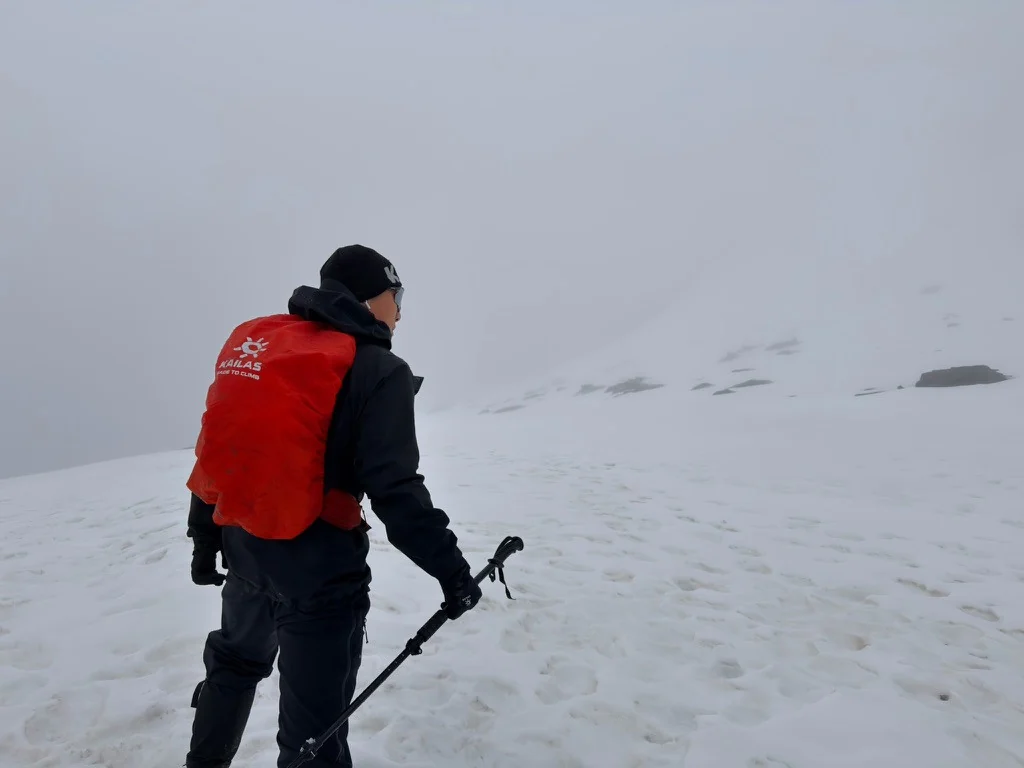
Low cloud changes the navigation problem
If visibility deteriorates, ask how the plan and return journey will be reassessed. A clear photograph from another visit cannot answer that question.
Discuss the return journey, not just the summit approach. Who is responsible for navigation, and what happens if the party can no longer confidently identify its route? A previous visitor's photograph is not evidence that the same views or conditions will be available.
New snow calls for more than a weather-app check
A weather forecast and an avalanche assessment answer different questions. NOAA explains that avalanche forecasters combine weather information with terrain and snowpack data. A forecast of sunshine alone therefore cannot establish that a snow slope is suitable to travel across. NOAA: check the forecasts first
For a proposed Chinese mountain objective, ask what relevant, current snow information is actually available and who is qualified to interpret it. Do not assume an overseas avalanche bulletin covers your destination. Equally, missing information is not evidence of low risk. This article does not verify the availability of a local bulletin for any particular route.
Thunderstorms can remove the summit option
If thunderstorms are forecast, changing or postponing the outing may be necessary. Plan how to avoid exposed high ground before the storm arrives rather than waiting until the group reaches it.
The US National Weather Service warns that no outdoor location is safe when thunderstorms are nearby. If thunder is heard, stop the climb and seek suitable shelter, such as a substantial enclosed building or a fully enclosed hard-topped vehicle where accessible. Simply getting lower does not make the outdoors lightning-safe. NWS lightning safety Planning for outdoor activities
Check access separately from the weather
A better forecast does not by itself establish that a route is open or that your activity is authorised. Request the applicable official notice, its date, the section it covers and any approval conditions. Recent local observations are also needed to understand actual conditions. Neither an old closure notice nor an informal assurance should be stretched beyond what it establishes.
A documented example is 18 March 2025, when the Siguniangshan administration announced a temporary scenic-area closure following persistent snowfall and serious icing on some sections. It said reopening would be announced separately. This is a historical example of weather changing access, not a statement that the scenic area is closed now. Original Siguniangshan notice
A separate 22 May 2026 notice concerns unauthorised activities in undeveloped and unopened parts of the Siguniangshan nature reserve. It is not evidence that every tourist area is closed, or that a particular summit attempt is authorised. Official notice
For a possible sightseeing alternative, our comparison of Siguniangshan's three valleys helps explain the different visit styles. Any alternative still needs its own access and conditions check.
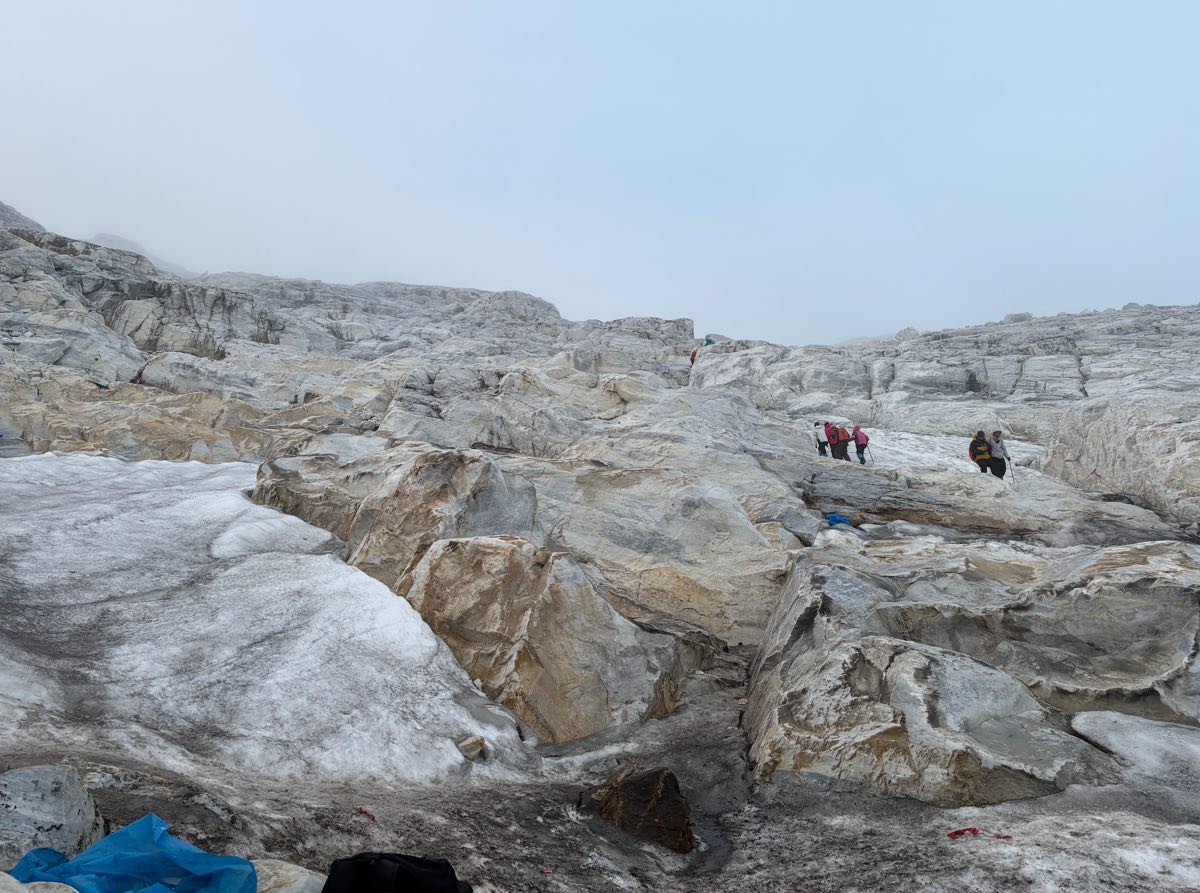
Agree on decisions before the pressure builds
A route plan should account for the group's experience, equipment and acclimatisation as well as the mountain's condition. The UIAA recommends considering decision points and alternatives during planning. UIAA route-planning criteria
Before departure, ask the organiser to explain:
- Who makes the decision to change or stop the climb?
- When will the weather and conditions be reviewed again?
- What would rule out the intended objective?
- What alternative, if any, has actually been assessed?
- How will everyone hear and understand a change of plan?
Avalanche.org's decision-making guidance emphasises identifying uncertainty, agreeing on terrain to avoid, preparing alternatives and keeping communication open. Those are planning principles, not a route-specific approval for China. Avalanche.org decision-making framework
Treat turning back as a possible outcome from the outset. Distance already travelled, a summit photograph or a tight flight connection should not become a reason to disregard the assessment.
Confirm the practical consequences before booking
Weather flexibility has practical implications. Ask for written answers to these questions before committing:
- If the climb cannot start, is there an alternative activity, a postponement option or a cancellation?
- If the party turns back after starting, how do the agreed terms apply?
- Which transport, accommodation or equipment arrangements can be changed?
- Who confirms any additional charges before a change is made?
- How will a revised finish affect onward travel?
These are questions to resolve for your booking, not a statement of SHANLO's inclusions or refund policy. Do not assume that a spare day guarantees another attempt, or that a lower-altitude alternative is automatically available.
If equipment will be rented, also use our mountaineering gear-rental checklist to clarify the actual items and arrangements. Equipment preparation and a weather decision are separate conversations.
Tell us what you want from the trip
When contacting SHANLO, share your preferred dates, previous hiking or climbing experience, intended destination and how much flexibility you have. Tell us whether the summit is your main priority or whether you would also value a different outdoor experience if the climb cannot proceed.
Use the enquiry button to discuss a customised outdoor trip in China. The objective and arrangements need to fit the conditions, access requirements and your agreed booking terms.
SHAPED AROUND YOU
Discuss a mountain plan with room to adapt.
Share your dates, experience and mountain objective, including how much flexibility you have if conditions change.