CHINA · EQUIPMENT PLANNING
Renting Mountaineering Gear in China: What to Check First
Before you rent mountaineering gear in China, ask for an itemized equipment list, confirm the fit of anything you will wear, and arrange for technical equipment to be checked with the boots and clothing you will actually use.
For a trip in Yunnan, western Sichuan or elsewhere in China, a phrase such as “equipment provided” leaves too much unanswered. Which items? In what sizes? Who checks them? And what happens if something does not fit?
Use the questions below before you finalize your packing. They are a starting point for a conversation with your organizer and equipment provider.
1. Start with the activity, then ask for the equipment list
Tell your organizer which trip you are considering and what mountain experience you have. Ask for the equipment list for that particular activity and season. Our guide to trekking and mountaineering in China explains how the activities differ.
A general hiking packing list cannot settle the needs of a snow-and-ice objective. Equally, a photograph of a snowy summit is not enough to decide which equipment you need. The Haba Black Lake trek and Haba summit comparison gives one example of why similarly named trips need separate planning.
Ask who will confirm the final list and when it will be reviewed. Any change to the planned activity should prompt another check of what you need to bring.
The list should make clear which items are personal and which are shared group equipment. Treat it as part of your trip preparation, rather than borrowing a list from an unrelated route.
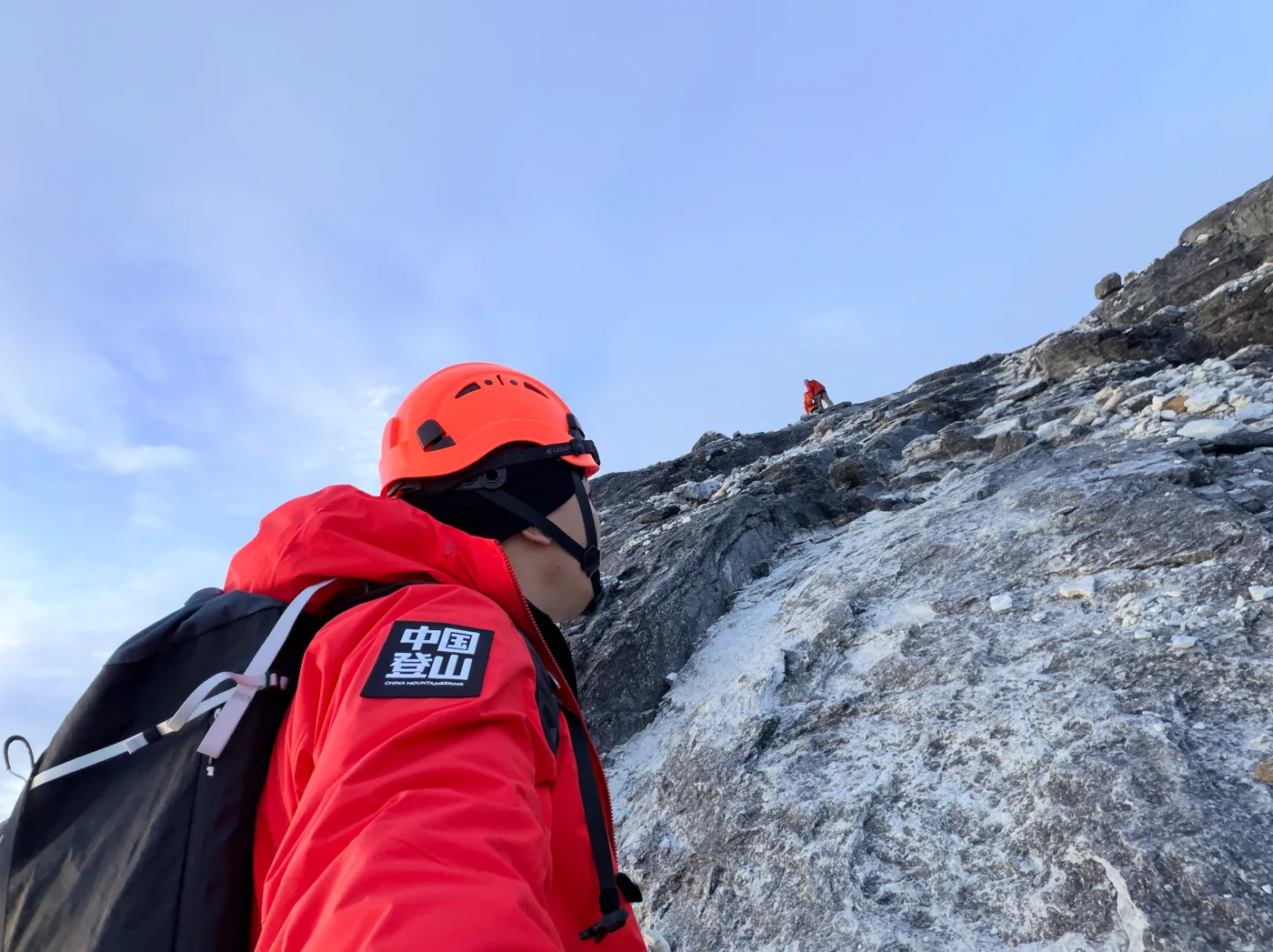
2. Get “included,” “rented” and “bring your own” in writing
Ask your organizer to put every required item into one of three categories:
- Included and supplied for your trip
- Available to rent separately, subject to confirmation
- Your responsibility to bring
Have them name the items individually. If the list calls for boots, crampons, an ice axe, a helmet or a harness, each needs its own answer. Do the same for less conspicuous items such as gloves, eye protection, a headlamp and spare power.
For anything supplied or rented, confirm the size or model where relevant, who provides it, and when you can try it. A promise that “there will be equipment” is not the same as confirmation of the equipment you need.
Keep the final list somewhere you can access while packing and at the handover.
3. Give rental boots a proper fitting appointment
Ask which boot models and sizes can be reserved, and what alternatives are available if the first pair does not fit. Share your usual sizing and any fit issues you already know about.
Try the actual pair with the socks you intend to wear. Tell the fitter about pressure points, heel movement or discomfort rather than hoping these will disappear during the trip.
Yamnuska Mountain Adventures highlights the difficulty of first wearing unfamiliar rental boots when the walking has already begun. Its advice supports leaving room for a proper fitting before departure. Read Yamnuska’s discussion of renting mountaineering boots.
If you bring your own boots, ask the organizer to check their suitability too. Familiarity is useful, but the boots still need to match the activity and the rest of your equipment.
4. Check the exact boot-and-crampon combination
“Crampon compatible” needs a more specific follow-up: compatible with which crampon and which binding system?
Send the provider your boot make and model in advance, and bring the actual boots to the fitting. Ask the responsible professional to check the complete combination against the manufacturer’s instructions before use.
Petzl’s crampon guidance treats compatibility as a system question involving the boots, crampons and bindings, and requires a compatibility check before going into the field. Its VASAK range has different binding options. A broad label such as “hiking boot” or “mountaineering boot” does not answer the question by itself. Petzl VASAK product information and instructions.
This is a fitting and training matter. Do not use a blog checklist to improvise adjustments or decide that an unfamiliar combination is safe.
5. Ask about inspection, history and replacement
For protective equipment, ask the provider:
- Can you identify the manufacturer and model?
- What inspection and maintenance records are kept?
- Who checks the equipment before it is issued?
- How are damaged or questionable items taken out of service?
- What is the replacement plan if an item fails a check?
Petzl’s crampon inspection guidance emphasizes checks based on the equipment’s instructions and keeping inspection records. Appearance alone cannot answer questions about an item’s history. Petzl’s crampon inspection procedure.
Raise any concern with the responsible professional before accepting the item. Ask for a suitable replacement when its condition or suitability cannot be established.
A quick look by a traveler does not replace the inspection required for that equipment.
6. Check the personal items around the technical kit
Work through clothing and everyday equipment with the same care as the headline items.
If the list includes a rental jacket, ask about sizing and fitting with your other layers. For a sleeping bag, ask for the exact model, its stated ratings and why it has been selected for the planned conditions. Ask how rented clothing and sleeping equipment are cleaned and dried.
For a headlamp, confirm whether the power source is supplied, how it is charged and what spare power you are expected to carry. Check that the unit works at handover.
Bring your own socks and base layers if that suits your packing plan, but confirm the required clothing list rather than treating these suggestions as a complete kit.
7. Leave time for handover and an alternative
Before traveling, confirm the collection place, fitting time, return arrangements and contact person. Overseas travelers should also ask whether the briefing and written equipment list will be available in a language they understand.
Ask what happens if a reserved size is unavailable, equipment needs replacing, or the planned activity changes. Clarify any deposit, cancellation, damage and return conditions directly with the provider.
The important point is to resolve these questions before the trip depends on the equipment. If a suitable item cannot be confirmed, agree on the next step with the organizer before proceeding.
A short checklist to send your organizer
“Please confirm the equipment list for my planned trip, including:
- Every item that is included, rented separately or brought by me
- Available models and sizes for anything I will wear
- A fitting appointment using my actual boots, socks and layers
- Who confirms technical compatibility and equipment condition
- The briefing or training I will need
- The replacement plan if an item is unsuitable
- Collection, return and rental conditions”
Add your existing equipment details so the organizer can identify what still needs checking.
Frequently asked questions
Can I assume a guided trip includes technical gear?
Ask for the itemized inclusions for your specific booking. The phrase “guided trip” does not tell you which equipment the provider has agreed to supply.
Should I rent mountaineering boots or bring my own?
Base the decision on suitability, fit and a confirmed rental option. Bringing familiar boots can simplify fitting, while rental boots require time to try the actual pair. Either choice still needs to be checked against the activity and any crampons involved.
Is this checklist enough to prepare for using technical equipment?
You also need the appropriate instruction and supervision for the activity. Equipment manufacturers set use requirements for their products; this article does not teach crampon technique, rope systems or other mountaineering skills.
Planning your mountain trip with SHANLO
SHANLO plans custom trekking and mountaineering trips across China, with a focus on Yunnan and western Sichuan. When discussing your trip, include the equipment you already own and the items you may need to rent, so these questions can be addressed during planning.
Share your proposed activity, dates and equipment questions through our tailor-made travel enquiry so we can discuss what needs confirming for your trip.
SHAPED AROUND YOU
Plan your mountain trip with us.
Tell us about your planned activity, experience and the equipment you already own. Discuss what still needs confirming before you pack.