SIGUNIANGSHAN · CHOOSING A PEAK
Dafeng vs Erfeng: Which Siguniangshan Peak Fits Your Experience?
Dafeng and Erfeng are both five-thousand-metre peaks in the Siguniangshan massif. If you are choosing between them, start with your current mountain skills, the preparation you can undertake and the terrain you are prepared to face, rather than choosing the higher summit automatically.
The Siguniangshan authority lists Dafeng at 5,025 metres and Erfeng at 5,276 metres. Their summit elevations differ by 251 metres. That figure tells you little about the walking distance, ascent from your actual starting point or difficulty of the descent. Official mountaineering overview
This comparison helps you ask for two genuinely comparable proposals. It is not a route guide or confirmation that either ascent is available on your travel dates.
Why the same introductory label can be misleading
The authority's mountaineering overview places both peaks in an introductory category. Its route-recommendation page describes Erfeng's summit section as more demanding and calls for greater physical fitness and some snow-and-ice skills. Official route descriptions
These broad descriptions are a starting point. They do not specify the equipment, instruction or protection that a particular group will need on a particular date.
For Dafeng, avoid interpreting “introductory” as permission to arrive without mountain preparation. For Erfeng, ask exactly what the extra demands would involve. If the answer is only “a little higher,” request a clearer explanation of the upper mountain and the return.
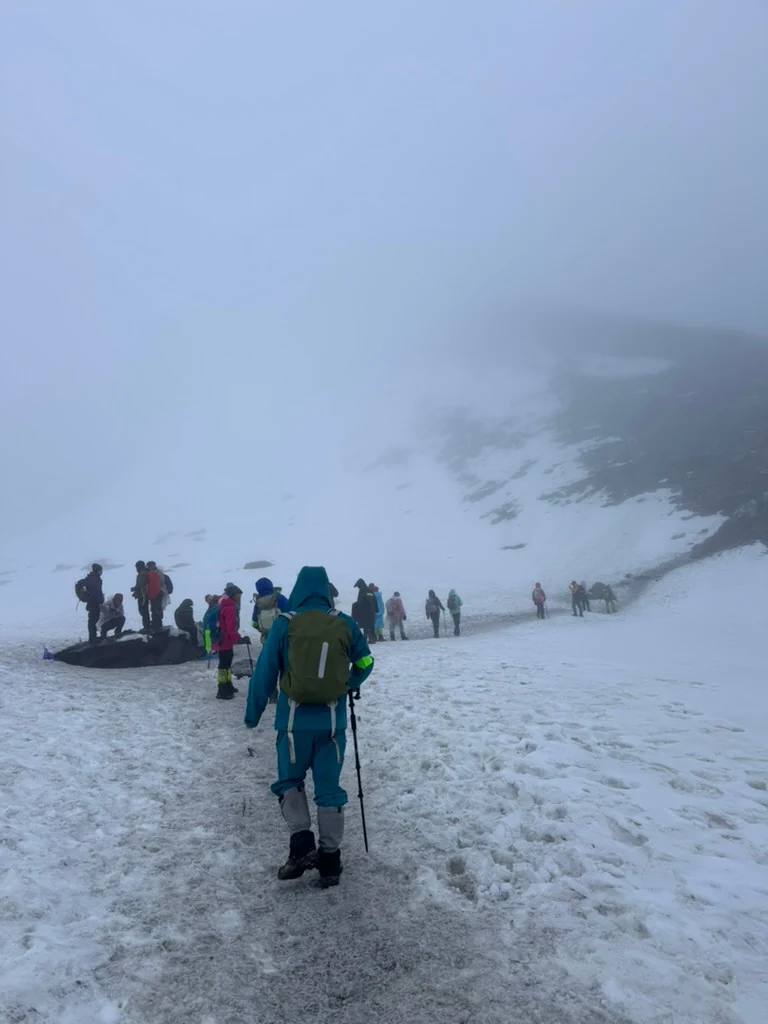
Compare the difficult sections, including the descent
Ask for a recent description of the proposed ascent, with the date of the observation. Useful questions are:
- Where would walking become more demanding, and what movement skills would be needed?
- What snow or ice has actually been observed, and what remains uncertain?
- Which skills must I bring, and which can realistically be practised before the ascent?
- What changes on the way down, when I may be tired?
A photograph can make this conversation more concrete if its location and date are known. A summit portrait alone cannot show the difficult section, the descent or present conditions.
The UIAA's planning guidance considers the route, participants' competence and mountain hazards together. That supports choosing an objective from the actual plan and group, rather than treating a peak's label as a universal difficulty rating. UIAA route-planning guidance
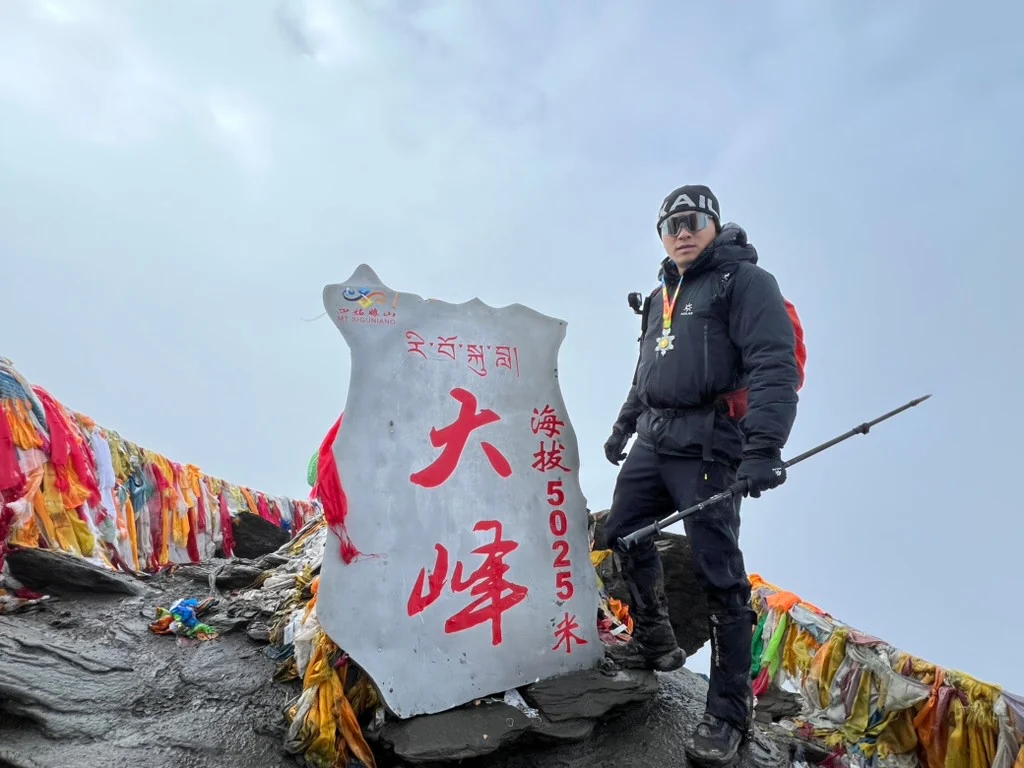
Is a previous Dafeng ascent enough for Erfeng?
A completed Dafeng ascent is useful information, but the details matter. Tell the organizer when you went, what the ground was like, which equipment you used and how comfortably you descended.
For example, someone whose experience was limited to dry-ground walking should say so if the new proposal involves snow-and-ice skills. This is a hypothetical comparison, not a report about either peak's current conditions.
Ask which parts of your previous experience transfer to Erfeng and where the gaps remain. A suitable next step might involve preparation, a different objective or postponing the attempt. There is no need to make the choice a test of ambition.
If you are still deciding whether Dafeng itself fits your experience, read our Dafeng experience and preparation guide first.
Check the whole altitude profile
Neither summit elevation describes the complete trip. Compare where you arrive from, where you would sleep and how the ascent profile changes between the two proposals.
Do not assume that choosing Dafeng removes the need for altitude preparation, or that a previous successful ascent guarantees the same response this time. The CDC identifies altitude, ascent rate and previous response as important considerations; physical fitness does not protect against altitude illness. Gradual ascent and attention to sleeping elevation remain important for either choice. CDC high-altitude guidance
For individual health concerns or previous altitude illness, seek advice from a clinician familiar with high-altitude travel. A peak comparison cannot provide medical clearance.
Ask for two comparable plans
Before deciding, request the same information for each option:
- The proposed overnight elevations and the time available to adapt.
- The expected terrain and skills, with recent observations separated from assumptions.
- The equipment and instruction to be provided, with inclusions confirmed in writing.
- The arrangements if one person needs to turn back or the objective changes.
- The current access requirements for that specific activity and group.
Keep the comparison grounded in your party. If one traveler wants a summit attempt and another mainly wants mountain scenery, ask whether their plans can be separated appropriately. Do not assume they can split from the group on the mountain without arrangements.
Confirm access separately from difficulty
A peak can suit your experience yet be unavailable for your proposed trip. Current authorization, access and local conditions need their own checks.
The September 2026 Aba safety notice requires appropriately organized outdoor activities and warns against entering undeveloped or unopened areas. The May 2026 Siguniangshan notice also prohibits unauthorized activity in those areas. Neither a general tourism page nor an earlier ascent establishes permission for your departure. Aba safety notice and Siguniangshan protected-area notice
Ask the organizer to confirm what applies to your dates, nationality, group and proposed activity, alongside recent local observations. If access or conditions change, agree on an alternative rather than assuming a switch to the other peak is automatically possible.
Choosing with SHANLO
For a first discussion, share your dates, recent mountain experience and what attracts you to Dafeng or Erfeng. Mention unfamiliar terrain or equipment plainly.
Use SHANLO's existing enquiry option to ask whether either objective can be considered for your dates and experience. The final choice should remain conditional on the appropriate assessment, arrangements and conditions.
SHAPED AROUND YOU
Compare the two objectives for your group.
Share your dates, recent mountain experience and questions about terrain and preparation. Ask what can be considered under current access and conditions.